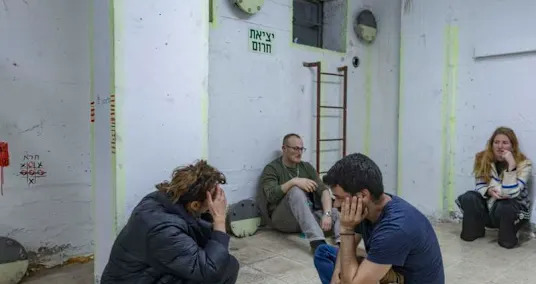
The data reflects the feelings of the young people participating in the survey, but paints a worrying picture that is mirrored in Aluma’s ongoing work in the field.
Amid the ongoing war and the upheaval it creates in everyday life, the Aluma organization, which works to expand mobility among young people in Israel and to provide support at life's crossroads of service, education, and employment, conducted an internal survey among 237 young men and women it supports. The results point to a severe and deepening crisis beneath the radar.
The data reflects the feelings of the young people participating in the survey, but paints a worrying picture that is mirrored in Aluma’s ongoing work in the field.
According to the data and Aluma’s work, many young people feel that the government does not see them and does not provide a sufficient response to their needs.
Only 3% of respondents felt that the state cares about the future of young people in Israel, whereas 74% stated that they feel that the state does not see them and does not care about their future at all, or only to a small extent.
The main impact is in the field of education, according to Aluma’s findings, with 64% of young people reporting damage or freezing of their academic plans due to the war, and 45% listed education as their primary concern.

About a quarter of those surveyed stated that they are especially worried about their economic situation.
Growing instability, diminishing optimism
At the same time, the feeling of instability is growing. A majority of the young people surveyed, 57%, reported uncertainty as a description of their feelings about their future in Israel. Only 30% felt optimistic about their future in Israel.
The potential consequences of the situations are already visible, with about 30% of young people surveyed having thought about or considered leaving Israel for an extended period, with 9% of them seriously considering or planning to leave.
Dr. Tami Halamish Eisenman, CEO of Aluma, said that "the young people we meet every day are at the very turning points of their lives - after military service, at the beginning of their studies, on the path to independence. The war caught them there, and we see the impact.”
“As in any crisis, they are the first to be affected and among the last to be talked about. This survey does not surprise us; it confirms what we hear from the field,” Eisenman said.
"The question is not whether there is a problem, but when we start addressing it. Without focused attention, we may find ourselves in a few years with much deeper gaps."
NEUESTE BEITRÄGE
- 1
 Charity 'feels the pinch' of higher energy prices06.04.2026
 - 2Russian military plane crashes in annexed Crimea, killing 29 people on board31.03.2026
- 315 Outrageous Cosplay Outfits That Will Blow You Away04.12.2015
- 4She was the supermodel dubbed 'The Face' in the '80s. Joining OnlyFans in her 60s taught her a lot.11.12.2025
- 5Find the Advantages of Careful Eating: Developing a Sound Connection with Food14.07.2023



Ähnliche Artikel
- Bad flu season getting worse; skyrocketing cases set state record27.12.2025
- Tuesday, April 7. Russia’s War On Ukraine: News And Information From Ukraine07.04.2026
- Journey Travel Objections for Your Next Experience05.06.2024
- Famous Versatile Brands: Your Decision05.06.2024
- Australians told to continue Easter travel plans despite fuel shortages04.04.2026
- Alice Wong, founder of the Disability Visibility Project, dies at 5117.11.2025
- Agios Pharma shares jump as US FDA expands approval for its blood disorder drug24.12.2025
- Expert advice for new stargazers: How to begin your amateur astronomy journey15.11.2025
- I traveled to 13 countries in 2025. This small island nation surprised me the most.31.12.2025
- How a Snake That Eats Cobras Redefined the Meaning of ‘King’02.01.2026